Friday, February 24, 2012

Outline of all Projects 2: The Goat & Cow Schemes

The thorny issue of the Goat Scheme has always been tricky. It was first introduced as a passing on the gift scheme which benefited some individuals, but as has been mentioned several times, the second time we tried to introduce it in another village, the goats went missing presumed consumed. In the original village, Keelalathur, we are now on the 3rd or 4th generation and there are 11 kids to be redistributed. I think we should see whether the smaller group at Seeterampet look after the goat better than at Kovasampet.

After the passing on the gift scheme faltered, we introduced the idea of SHGs raising goats, but as mentioned in a previous posting, this produced only modest returns. Mathew and colleagues went to an NGO convention and saw a co-operative model which we are keen to introduce here at RUHSA run by an SHG as a coperative, so we have the benefits of a group deriving an income, but also being able to generate an income for the EWCs. The capital could be put up by VRCT, 50% returns come to RUHSA for the EWCs and 50% go to the group. The newly redesigned VRCT committee will await a full proposal from RUHSA about this project and hope to be able to approve it for the coming year.

The Farmers Club Milking Program is another co-operative model initiated by one of the RCOs to benefit poor village farmers. FOV raised funds for 15 cows, giving 5 to each of 3 co-operatives. This acts as an interest free loan. The farmers pay 2000rs (£28) back per month from the milk and dung income they receive. It is early days, but we went to see the projects on weds (see previous pictures) and it is looking promising. RUHSA have trained the farmers in cow management and dung collection and as milk prices are good, the returns are also good. Each cow can produce 10l per day of milk which can fetch 17rs per litre. After feed costs etc they can earn about 100rs per day from milk alone. RUHSA feels that the farmers’ wellbeing has increased and there may be a chance to explore the impact of schemes such as this on other dimensions of health such as domestic violence, alcoholism etc. We will await the evauation after a year is up to see what the impact has been.

Next to be continued: diabetic shoes made by disability SHG, community college revamping & fund raising officer

Outline of all Projects 1: The Elderly welfare centres.

As in August, there are 4 EWCs with 100 beneficiaries, who receive a midday meal for 5 days a week. 25 are in Keelalathur and Kovasampet, 40 in Ramapuram and 10 in Seetarampet with the children. In all the centres the beneficiaries are generating a small income from paper bag making. These bags are sold to the College Shop in Vellore for 75paise per bag (abut a penny). Richard was enchanted to hear that because he had, unknowingly, bought some stuff from the very same shop and had, without the penny dropping remarked to himself on the ingeniousness of Indians to recycle their newspaper so productively.

In Kovasampet, they are still struggling with the garden. They are so keen to grow some vegetables, but the blasted monkeys made a mockery of the netting we bought by using it as a trampoline, thereby getting some entertainment until it broke, then they could have a post exertion snack. There are a couple of burgeoning tomato plants which the monkeys are eyeing keenly, but so far they are unscathed. I suggested they used the net for individual plants rather than stringing it up across the whole area. We will see if this fares better, but the keenness to persevere is heartening. As I mentioned before, they are a really feisty bunch in Kovasampet and they clearly relish the companionship derived from the group and sit chatting and even arguing with empowered enthusiasm. They are also adorable about my diminished cheeks.


As you can see, the garden attempts are a little sad :-(

Seetarampet is a lovely model and is the baby of the Bishopston innitiative. Here is a link to an adorable video of the children not sleeping and to Sally Whittingham’s blog where there is more detail on the whole project. When I visited Keelalathur, the first centre, again they presented me with a shawl to say thank you which they bought from their own money. I feel bad taking from them when they have so little, but it is also important to be humble enough to receive and to respect their honouring of us.

Today I visited Ramapuram where the SHG is super keen and they are doing well. They are less skilled at the paper bag making and apparently the quality control is lacking so they made less money than at the other centres, but they are a newer and larger group so they may have a little further to go yet. Mathew & I went there today by bus, it is a much further distance from RUHSA than the others so it is visited less often, so they had lots to tell us. Mainly they were asking fi they coud go on an outing to a nearby forest. None of them have ever had the opportunity to visit the forest, much less the luxury of having a picnic, so I have asked Mathew to cost it out and see if we can raise the funds for it. I can't imagine it would be that expensive. It is a very remote village with no rickshaws, so once the rickshaw from Latteri had dropped us off, we were a bit stranded so two of the village boys gave us a lift back to the bus stop by on their motorbikes which excited some comment from the locals.


This may be our new poster girl!


The plan now is to identify another area to open a further centre. We have roped in some more sponsors so the charitable income is increasing and the alignment of VRCT & FOV UK also now gives us direct fund-raising potential. I met the director of FOV Sweden who is also keen on supporting the elderly project and has a chair of Elderly Care Homes on his Swedish board who is looking to get some corporate sponsorship. He made the excellent suggestion of linking care homes with a single EWC in India to raise revenue. I had thought of Community to Community sponsorship, but this is even better. I may have to break my Staveley House fast and go there to do a presentation about the EWCs here. I will also approach the head of Risedale to see if they are interested. It’s a lovely idea to twin differing elderly populations. Perhaps they could start writing to each other as well. The letter might have to be translated, but it would be nice to have direct communication.

When Richard was here, we had a bit of a sticky moment about pensions. There is some suggestion that some of the elderly are unable to get pensions because they cannot afford to bribe the officials to get the forms completed. This may in fact not be the whole story, but Richard feels that this is a very easily surmountable problem and offered to pay this money to bypass the problem. I get very uppity about lining fat bureaucrats pockets in this way, not to mention the fact that as the new chairman of a charitable subcommittee I cannot be spending money in this way. In addition, as a fundamental principle, I object to sustaining a corrupt system. I would rather spend the time using clout to get it done properly, which would benefit more than the 12 or so people we know about. So there was not some insignificant friction and controversy. The upshot is that I think right will prevail. Next time I come, I am prepared to go with the elderly along with one of the RUHSA staff as their advocate and shame the officials to do it properly. Sadly, I do not have time to do it this visit. But who knows, perhaps wheels will have turned before then. If I were still teaching medical students, I could use this situation as an excellent example of the different between deontological and consequentialist ethical theory.


Thursday, February 23, 2012

The Elderly, some naughty kids, more cows & paper bags and a chicken or two


A beautiful hibiscus flower


Piles of completed paper bags 


Naughty children on their afternoon nap, slightly distracted by the funny white woman making snoring noises to encourage them.


The beneficiaries of the Kindergarten & Elderly Centre at Seeterampet.


Some of the elderly at Keelalathur. The women have benefitted enormously from the goat scheme which worked very well in this centre. The lady on the left is saving all her earned 9000rs (£13) for her funeral expenses so she can go out with a bang.


RUHSA staff: Rural Community Officers, Training officers and Community Physicians, including Dr Rita.


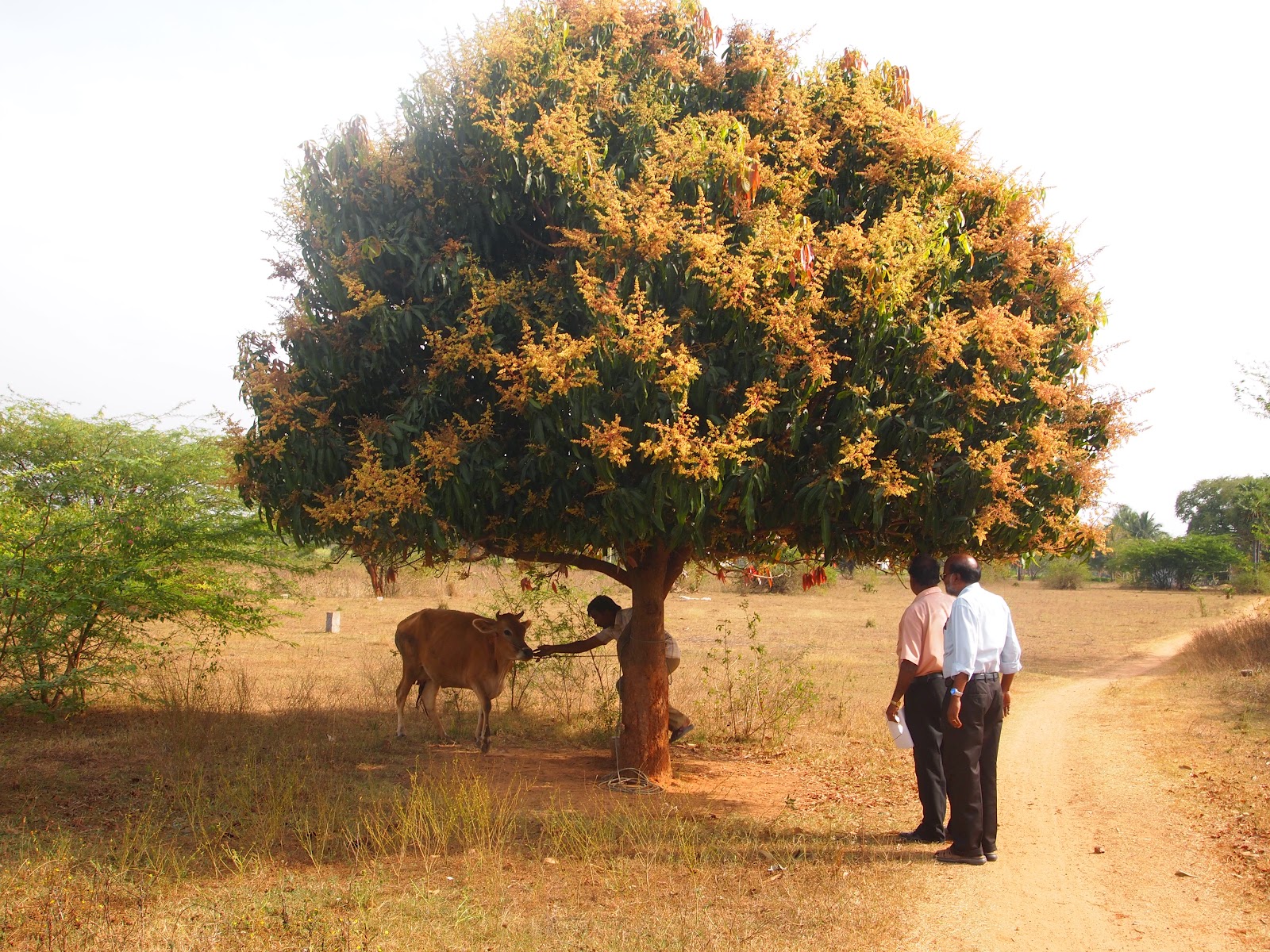
A particularly beautiful cow donated by kind British people to start a milking & fertiliser scheme for very poor farmers who form a co-operative. The income from the first cows bought (5) will subsidise future investment in cows for the remaining farmers in the co-operative. The Farmers also pay back the money  to RUHSA, so it acts as an interest free loan, so more farmers clubs can be started.


The local RCO trying to catch another of the RUHSA purchased cows.


A sleeping calf


The third cow. Nice shadow.


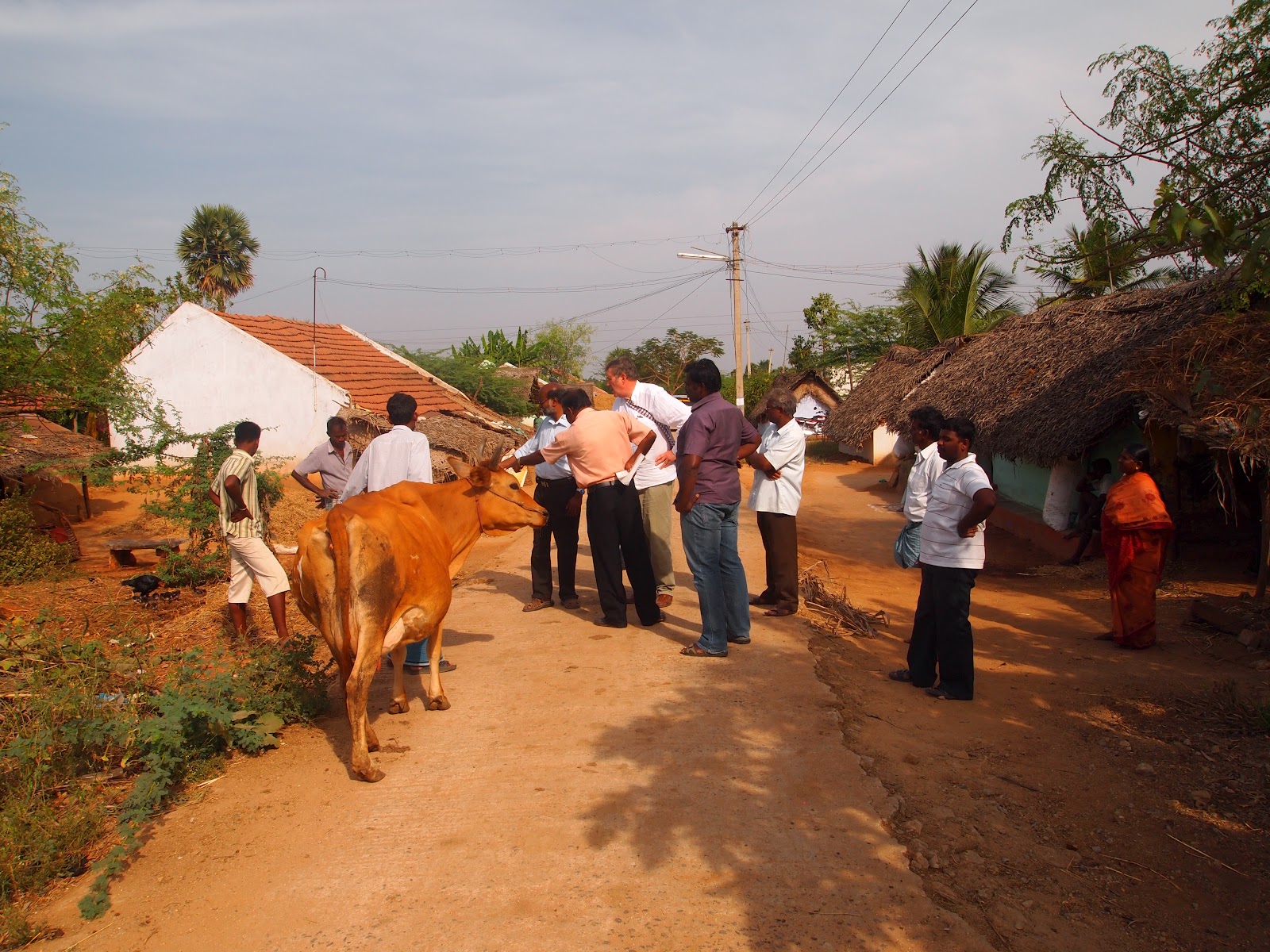
Negotiations and picture opportunities with Richard and the cows.


Jungle fowl and little jungle fowlets


The fifth cow (fourth cow wasn't very photogenic)


Richard showing some more naughty children his photo of them.


Prabhu, the OT, assessing an elderly gentleman who had a stroke a month ago with R hemiparesis. He is going to show him & his family some basic activities of daily living, exercises and positioning to prevent contractures, reduce weakness and improve function. Behind are some informative posters.


Bullock cart in the sun.


You made not be able to see, but this lady is not sure of how jigsaw puzzles work, so she just puts the pieces together regardless of the picture.


We came across a huge festival on the way home one day. There was this crazy, enormous foil-covered construction being dragged through the streets, whilst people danced to loud drumming and generally made a lot of noise. Not sure what the reason was, but with 1000's of gods, any old excuse will do.


Chit-chatting at Kovasampet whilst making paper-bags. They have always been a fiery lot here and they had lots to tell us. 


One lady was all fingers and thumbs and kept getting herself stuck to the bags rather then the paper stuck to itself, so she needed help from a neighbour.

Tuesday, February 21, 2012

The downside of working with the elderly: Goodbye to Rathinam

On the spur of the moment and mainly to expend some chapati acquired energy I decided to cycle to Keelalathur Elderly Welfare Centre for an impromptu visit. Tomorrow there is an official visit for which Jamuna, the caretaker, will be forewarned, so everyone will be in their places, scrubbed, doing puzzles, playing games and generally showcasing the simple facilities at the centre, but I like arriving unexpectedly and seeing what is really going on, so today I cycled the 7km to Keelalathur and surprised them. I was heartened to see several piles of completed paper bags which some of the elderly had made. Each bag sells for 75 paise (1p) and so far they have made 738 bags in a month or so. It is hardly a project worthy of Dragon Den interest, but nonetheless sitting and chatting to friends whilst earning a few rupees instead of spending the whole day scouting around for hard labour which moment for moment has a much poorer rate, is a good use of their time.


When I arrived this time there were several new faces and only one of the men was there. Although a couple more arrived later, when I enquired, Jamuna told me that there had been 8 deaths since the start in 2006. I knew of a couple, including Sukkupattu who was a particular favourite, but I was extremely sad to hear that Rathinam had also passed away since August. Apparently he had been hospitalised for TB and had not survived. Rathinam was a relatively educated man who had married a lady with schizophrenia which was very difficult to manage, especially when she had children, so the family allowed him also to marry her younger sister. They all lived in the same house caring for each other and the children. Everyday Rathinam would bring his schizophrenic wife to the centre, and whilst she benignly sat and stared around, he would read the newspaper out loud to his friends. He was particularly fond of me and every time I visited, he would stand up and make a speech about how grateful he was for the centre, giving him peace and friendship in the last years of his life. If anyone complained about not being given saris or other things, he would get cross and tell them to be grateful for what they had. When we discussed the possibility of opening another centre after Keelalathur had been open for a year and, trying to stress the importance of sustainability, ie income generation, we had said that there was a limit to the funds available, he made one of his speeches. He stood up and said that they would always be grateful for what the centre had given them for a year and if it was the turn of other poor elderly to benefit from our generosity, they they would gladly give up coming to the centre so others might have a chance to receive what they had. It is almost inconceivable that someone with so little could be so generous. I am so glad that Rathinam derived such pleasure from the solace that the simplicity of the Keelalathur Elderly Welfare Centre provided him. His wife still comes and she is now surrounded by her friends; even though her mainstay has passed away, she has been incorporated by the group and they carry on her care and support.

Superstition and ear tagging

Last year one of the most exciting prospects was the idea of working with the SHG Federation, a community organisation formed by elected representatives from each SHG in one area. The Federation acts as an agent for each of the SHGs in applying for, managing & holding funds in order that they do not have to apply directly to the banks themselves. It has the advantage of being a peer represented group who due to economies of scale have greater power than a small village SHG. Peer pressure ensures that people behave with probity because everyone has a vested interest and of course these are elected members who can be stripped of powers if need be. At the time last year, when we raised this with the Federation, they were extremely keen. They helped us develop the model whereby  VRCT donated funds for some goats. The money would be handed over to the Federation who using their local knowledge were to identify a group of women who were keen and able to rear goats  and then organise the giving of goats to these women. When the goats were sold the capital would be returned and a proportion of the profits would be donated to another SHG to manage an elderly welfare program. The advantage of this model for RUHSA and VRCT was that the same money went much further empowering two SHG groups and an elderly group. The advantage for the federation was supposedly that their status & eligibility for government grants increased because you get extra points for social welfare work done. Everyone seemed keen, however, there was a slip twixt cup and lip between august and now and for some reason the Federation backed down.

As a result, RUHSA developed another model and bypassed the Federation by identifying two SHGs directly themselves and acting as goat agents. Interestingly, both groups behaved quite differently. One group have been highly difficult to work with, starting with being tricky about insurance. Apparently, insurance (which is essential, as we found when one group of elderly beneficiaries ate the goats rather than rearing them) requires the goats to have a tag on their ear. This particular village believe that this is bad luck and were cross about the tagged goats. As one might expect with superstitions, it was difficult to persuade them that there was no connection between ear-tagging and luck. Unfortunately, the goats themselves were not helpful and did not work with us on this. One jumped into a well and another one inconsiderately dropped dead. They even attributed the death of an entirely unconnected cow to the ear tagging, thus enabling the women to nod knowingly and smugly and demand the goats be sold immediately. Such was the pressure that the goats were sold prematurely and the profits realised were very small. However, even so, this represents the first formal community contribution to the Elderly Welfare Program.

The second village were more amenable and relaxed about the whole ear tagging business - I think it was helped by their goats avoiding wells and death successfully - but they have been rearing their goats for longer and those who have sold realised 33% net profit, which is a good return. There are still a few women who have not sold yet, who will scoop even more profit. At the moment it is generating small amounts of money only, but it is a start and also it is an attractive fund raising opportunity for FOV, as not only are you enriching the life of the person who owns the goat but also you are providing some social benefits by subsidising elderly programs. Of course the goat does not benefit much, but there's always got to be an underdog.

Overall, the scheme has some promise, but as it is, the returns are too small and the workload for RUHSA staff in galvanising and motivating the SHG women, not to mention the time taken arguing about the relative likelihood of their goat having Kamikazi tendencies because of the presence of an ear tag, has been somewhat arduous and therefore not sustainable. As a result the team have been looking into other options and there is some interest in a goat shed project where there are a group of goats raised by an SHG in a shed. The advantage being that more goats can be reared at anyone time, there is no need for grazing and income is generated not only by the sale of the goats but also by sale of manure which collects below the slatted floor of the raised shed. RUHSA has a space it can construct a shed and an SHG group who can be in charge of it and the income generated can be shared by RUHSA & the SHG.

In addition to the income generated for the projects as a whole, there has been some movement on opportunities for individual income generation. Prabhu, the OT, has initiated some paper bag making in all the EWCs. The materials are free apart from the glue, which is very cheap, the staff are donating old newspapers and the elderly slowly, but efficiently transform them into paper bags, the demand for which is apparently high. For a couple of hours work, when they come to the centre, whilst sitting and chatting to their friends, they can make some paper bags and earns a few supplementary rupees. Below is one of the men using a stick to spread the glue as he wraps the newspaper around a sari box to make consistent, uniform sized bags.


It has only taken 5 years to develop these income generating projects and we are a long way from self-sustainability, but there are even more ambitious plans in the ofing and now I am chairman of VRCT I have at least some say in what we can do. Which is very exciting.

(*Note to self. Mustn't let the power go to my head.)

Monday, February 20, 2012

2012 visit: Brief recap on why I come out to India.

Once more I find myself sneaking into RUHSA late at night and being shown to my dear little room which had been vigorously cleaned for my arrival, resulting in a not-so-faint odour of Jeyes fluid. None the less, I slithered into bed, warmed by the balmy air and a light coverlet, not missing the nip and pull of freezing mountain temperatures, and slept like a log until the familiar early morning crow conversations woke me up refreshed and raring to get going.

My arrival last night coincided with director of Friends of Vellore, Richard Smith's drive to Vellore, so he very kindly picked me up from the airport, giving us a great opportunity to plan our strategy for project fundings for 2012. Friends of Vellore is the umbrella organisation responsible for fundraising for projects in the main hospital; VRCT - Vellore Rural Community Trust - has always been an affiliated, linked trust fund separate to FOV, but last year we merged and I have been made chairman of the VRCT subcommittee which remains responsible for supporting rural healthcare projects and focuses on the work done at RUHSA. RUHSA is the Rural Unit for Health and Social Affairs, a rurally situated health and welfare department with a small hospital and training centre, 30km from the centre of town. It is responsible for a population of around 200,000, in a district comprising roughly 30 panchayats (village municipal units) and has a wide network of local activities and has done for 30 years. The beauty of being involved with RUHSA is their vast network of well-developed relationships, local knowledge and experience in grassroots working. The main hospital is a huge monolith with impressive technological expertise comparable to a western tertiary centre. The work they do there is incredible, but it is very high tech and therefore, like all tertiary centres, focusses on those who are already sick and not on keeping people healthy or dealing with the early, primary care stages of illness. Primary care in India is still in its organisational infancy, but is gaining intellectual credibility due to the work of dedicated family practitioners, such as Dr Raman Kumar, who has set up and is running the increasingly high profile Associated Family Practitioners of India (AFPI) which has now been awarded WONCA status, but in the meantime, places such as RUHSA provide much a much needed bridge between health and devastating illness. RUHSA not only deals with minor and early ill health, but also runs community development projects such as the SHG (self-help group) co-ordination, waste management schemes, 2-wheeler mechanics apprentice programs, cow-rearing projects and of course our elderly welfare and goat schemes.

This time, for the first time therefore, I arrive with clout and the capacity to made decisions about how our charitable moneys are spent, rather than merely being a reporter to the committee on what is going on. It is a very exciting opportunity to really encourage RUHSA to become even more ambitious and wide-reaching.

Saturday, August 06, 2011

Last things crammed in

Last night, I spent a long time dividing my now vastly expanded luggage into two equal piles. 15 shirts in the left pile, 15 in the right, 2 saucepans in the left pile, 2 in the right and 2 in the hand luggage pile. 1, 1 beaded salwar kameeez, 10, 10 packs of spices, 2, 2 novels, 2, w2 tiffin tins etc etc. At the end of the process there were 2 bulging piles, looking not unlike the checkout counter at Shoppers Stop in Bangalore. Bearing in mind that I came over with 16kg, it was difficult to gauge now how much more luggage I had acquired. It looked enormously more. My allowance was an astonishing 46kg excluding hand baggage. I have never had so much, note to self - fly Air India again if needing to do some new wardrobe shopping. Of course, I saved up my mental shopping credits for this trip, bearing in mind that none of the clothes I had before fit me at all, having lost almost as much as my baggage allowance. Looking at the two stuffed suitcases, I imagined them attached to me and realised quite how much smaller I must be now. It’s always difficult to feel different because always you feel like you and the change is gradual, but when faced with almost the amount of kilos of lard lost repackaged as shirts, saucepans and chilli powder, the reality hits home. It was with astonishment and not some little dismay, therefore that I discovered that my total kiloage was only 31kg - not only far short of my allowance, but also actually less than I have lost. I would have to imagine an extra couple of tawa pans strapped to my bum. Of course, the fat was distributed everywhere , having more or less run out of places to go, and my sister has since mourned the demise of my Poggibonsi (fathead). The good news is that there was a Shoppers Stop at Bangalore airport, but I didn’t get 15kg of extra presents just because I could.
This trip has been a fine one, but there have been moments of great sadness. Not because of what has happened here, because everything has been immensely positive and proactive, but because I have so often thought of Dad. One of the reasons I love India so much is because of her exceptional spirit of possibility and the very high amusement index. Although India is also oppressive, very oppressive, to many, there is, underlying everything, such an astonishing sense of potential. Despite how difficult life can be for so many of the population, there is amazing hope. It seems strange that a culture which seems so fatalistic, can so palpably take its destiny into it’s own hands. Wherever you go there is evidence of this. Someone reminded me of the man sitting on the side of the road selling shoes. But he only had 2 pairs. His belief that a customer who happened to want a size 7 black moccasin should walk past his “shoe stall” keeps him going there every day. And, judging by the things that people buy on the trains and at traffic jams, sold by members of apparent consortia, usually of blind people, perhaps blinded in order to gain entry to the employment program and evidence of India’s cruelty to her people, it may be that he gets daily customers who know where to get a fine, and cheap, pair of size 7 black moccasins. This spirit of India is identical to that possessed by Dad and so much in evidence during his last few months. Despite the cruelty of the cancer and the disintegration of his physical health, his suppleness of spirit (beautifully described by my cousin), courage, hope and positivity was manifest for all to experience and wonder at. He was selling his own two pairs of shoes and it is a cruelty that in the end, despite his hope, it was not enough. India, for this reason, and also for her history in which he was so fascinated, her abundant humour - so many stories I could have told him on my return - and the changes in all the work I have been doing - he would have been so interested to hear how the projects have progressed - all these embody Dad. It feels as if I have been on a pilgrimage to his soul and it has been sad, but beautiful.

Here are some photos from the whole experience.


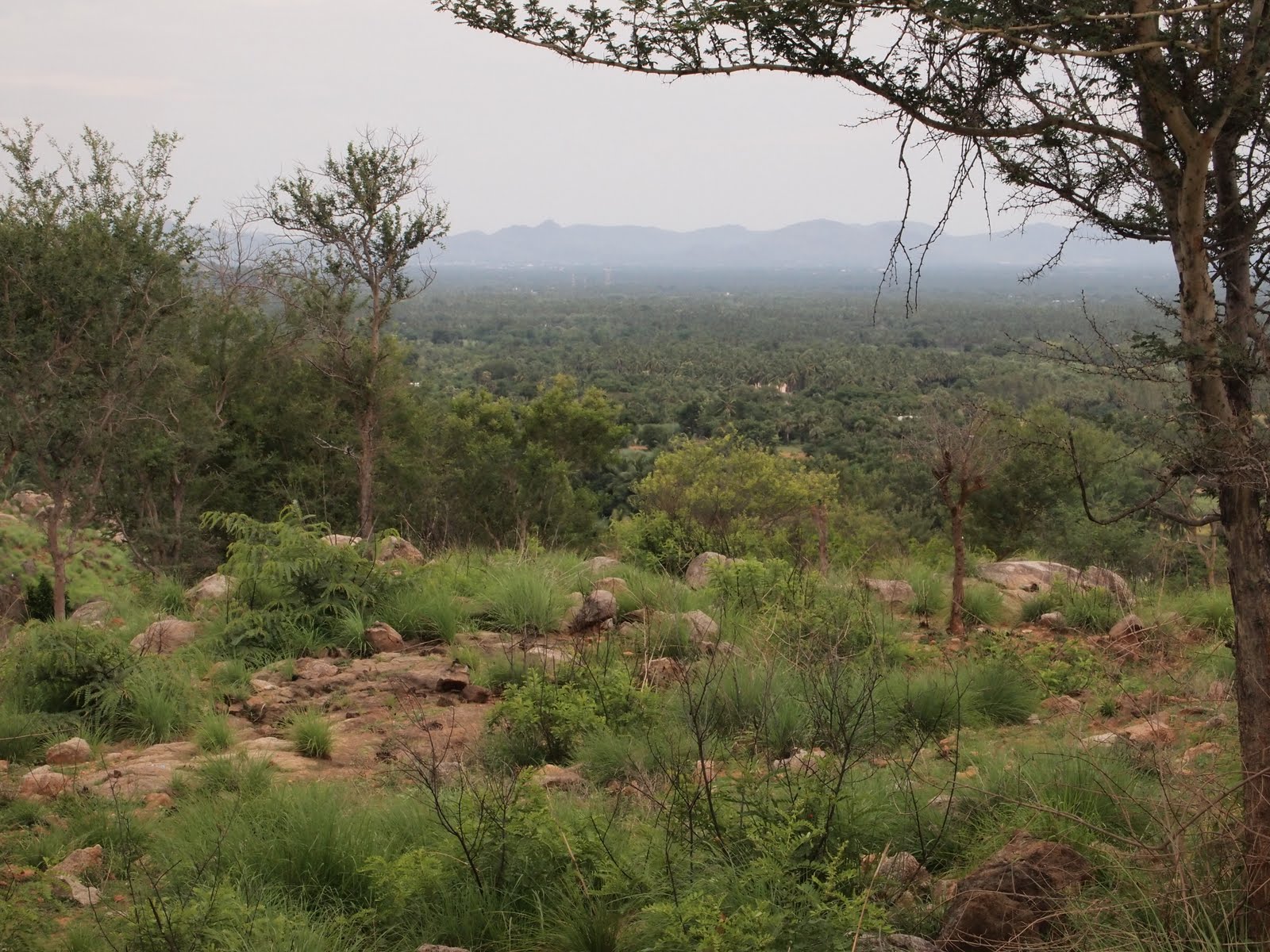
The beautiful countryside around RUHSA. Cycling up the hill to the Temple offers a stunning view of the plains. Coconut plantations and fields as far as the eye can see.


The elderly centre run at Ramapuram. This is owned by the local village,established and run by two SHGs for twice as many people as the ones that RUHSA runs. They even managed to persuade the local politicians to spruce up their building, shich they did an excellent job of!


A little girl at the Pachaikilli Play Centre and Elderly welfare centre run by Bishopston, in Bristol, who started the Play centre and were moved to combine it with an elderly centre when they saw the one at Keelalathur.


A chameleon trying to be a stick.

Friday, August 05, 2011

Cramming the last few things in

It has been one of the busiest visits I have had at RUHSA even counting the time I successfully managed to squeeze a 5000km road trip to the Himalayas in between village visits. RUHSA is such a busy, active and productive place nowadays that there is so much to see and do. In addition, my time at Celine's was also busy, although I was no longer doing the Karuna Niwas website, which appears to be down. Grrr. A good example of paternalism not working, I feel. Quite annoyed by that, but will choose a time apart from his wedding to discuss it with Sudhir. Anyway, there are a few interesting things going on with Celine too, namely that she wants to develop the Spoken English language classes which are apparently successful and so it was timely that I should be spending time with current & retired teachers, which is what Victoria's family seems to consist of mainly. I am hoping that Caroline, who was absolutely lovely and enthusiastic, will be able to liaise with Celine and develop a link with her school from which both will benefit. Hopefully, students wanting a year off can spend 3 months with Celine teaching all kinds of people spoken English. It will be even better if I don't have to organise it because I am at capacity and I don't have any direct links myself anyway. So fingers crossed that will work.

At RUHSA over the last few days I have been cycling around like a loony (and receiving a response in kind from the villagers as I whizz by) going on field visits with the OT and visiting the increasing numbers of elderly centres as well as meeting the women of the PLF and SHGs who are very very interested in developing social welfare projects in their areas as discussed previously, with capital input (as opposed to income stream) from the UK charity. In addition I heard about a farmer's club which is being started using an interest free-loan from another UK charity to buy cows, which the farmers club members will pay back and the money will also be used to fund social welfare programs as well. The OTs field visits are part of the community based rehabilitation program which is trying to tackle the overwhelming problem of adults and children with mental health needs. The most visible part of the iceberg of this particular problem are children with learning difficulties and psychotic adults, but of course, mental health needs go much deeper and farther than that, not least extending to the care-givers of this very disabled & dysfunctional group of people who tend to require 24/7 & difficult input. It's early days and the problem seems to be beyond the scope of what is set up now, but little by little we can develop and evolve it into something which provides a wider benefit than it can possibly do so at the moment.

So we have some clear plans in place and expectations to be delivered in January when I or Richard, or indeed both revisit with a view to setting up the funding for the next years donations. For the first time there is a real sense of iterative progress rather than serendipitous change and it's good.

Final Wedding Photos

After the main ceremony, Victoria's friends and family had a lovely few hours to lounge by the pool and cloud-bathe whilst waiting for the evening do. Victoria's family are lovely. Her mum & Dad came, whom I had met in Jaipur all those years ago, but also her sister about whom I had heard a lot and who was as lovely as expected, her partner, Brian and her foster daughter, Ebony (of henna fame), as well as her fun cousin Caroline and Caroline's extremely popular nephew, Charlie, whom everyone adored, especially the young children, mainly because he horseplayed around with them endlessly, swinging them above his head, carrying them on piggy back and generally mucking about. I spent a wonderful afternoon chatting to them all, making new connections and I hope to be able to see them again at Victoria's English wedding when I return. Meantime, here are the last of the photos.


Victoria & her sister by the pool


Victoria & me by the pool (still no blooming tan)


Sorry about the blurriness, but I wanted to show the whole & final outfit. This is Emma, Ebony & Caroline


Charlie mucking about with the kids (and a not-so-kid)


Victoria's family (minus Brian)


A lovely one of me with the bride & her new husband....


...until I revealed that he (inadvertently, apparently) had his hand on my arse.

Tuesday, August 02, 2011

Wedding Weekend

Back in the tranquility of RUSHA after a frenetic weekend in Bangalore, dashing hither and thither for the various wedding related activities during which Sudhir & Victoria tied the knot, and in a hindu ceremony there really is a knot tying moment. Victoria & I met in a Haveli in Jaipur in January 2007 where she & I were both taking our parents, who were visiting their relocated daughters, around the golden triangle in the North of India. The Haveli, which is a hotel converted from an old Persian Town House, was a lovely building with islamic architectural features, including a courtyard and decorative stonework and was run as if it still were an old Persian townhouse. We were treated like house guests, all those staying dining with the family at night in the communal dining room. Victoria & I discovered that despite being 1000km from where we lived, we were in fact practically neighbours in the South of India, her being in Bangalore and I, in Vellore a mere 4 hour train ride away, which is nothing when considering distance in India. We also discovered that we had many other things in common, although a Brahmin fiance was not one of them - only Victoria had one of those -  so we became and have stayed good friends, spending much time together in Bangalore, Kerala and even on one occasion, Cumbria, where she visited on one of her trips home. After 7 years together, Victoria & Sudhir have finally overcome almost all the obstacles which culture, family, religion and India can throw at a transcontinental couple who fall in love and celebrated their wedding over the weekend. It is a small matter of detail that India still has a teeny trump card in that the bureaucracy of getting legal recognition of such a marriage whilst on a tourist visa (the only one Victoria is eligible for) without indulging in huge or indeed any amounts of baksheesh, was overwhelming and truthfully was not resolved before the ceremony, but if ever a public declaration of intent were made, Sudhir & Victoria after three days and four wedding events are more married than most people. It is only a matter of time and because Victoria quite rightly wants to make sure that it is legit in EVERY sense, so no illicit channels are being used, much to the disappointment of the cogs in the bureaucratic wheels.

The events kicked off on Saturday with a warm up party. Sudhir's family being Brahmin, neither eat meat nor drink alcohol. So the actual wedding itself would be a dry, vegetarian occasion, with potentially no music. Victoria was worried about the ability of people to mingle cross-culturally for the first time with only tender coconut juice as lubrication to the default Indian melodic background sound of frogs informing the world as to their mating intents, so they decided to have a warm up ceremony with booze and music to get the party started, which indeed it did. It was a light-hearted fun evening, with Sudhir's friends enthusiastically teaching the English visitors how to screw in the lightbulb to a loud, pulsing Indian beat. I am delighted to introduce outfit number one (for me, of course), a pale, powder blue chudidhar & pant suit, with silver highlights and beaded detail. Victoria looked lovely too.


On sunday, there was the Mendhi Event. This is the Hindu tradition of covering the bride's arms and legs with intricately patterned henna, a stains which lasts for for weeks. It is an occasion for women only, although a couple of men did sneak in, and it starts with the women in the bridegrooms family conducting a pooja (blessing) for the bride. This entails lots of turmeric & red sandal paste being rubbed into the hair parting, forehead, cheeks, feet and various other places, with yellow dyed rice being chucked here about the place, jasmine flowers placed in the hair and lots of walking around either chanting, or, because this is modern India, answering the many, many calls which came through any one of the dozens of mobile phones attending with their owners. Once the pooja is over, the bride settles down for the henna paste artistry. This takes four hours. Luckily Victoria is big into yoga and meditation, so sitting still for so long for her was not too arduous; she managed it all with great dignity, dressed in her sari and still with rice and cumin seeds (not, as I erroneously heard, human seeds) in her hair and without smudging the henna paste before it dried.


The house was full of bustling people, some of whom were also having much less extensive henna applied, there was food and tea and juice, all of which had to be hand fed to Victoria because she was unable to use any of her limbs. There was a lovely atmosphere and it allowed more mingling between the women. The two girls doing the henna were somewhat overwhelmed by the numbers and so there was not time for them to do my hands, but Victoria's sister's foster daughter was keen to have a bash and she did a great job on me.


On monday morning, the wedding ceremony took place in the garden of a beautiful resort, under a traditional Mandap, decorated with jasmine flowers, marigolds, banana leaves and roses, which completely covered every inch including the roof. There was a lovely Indian lady official (can't remember what it is called) who conducted the service in Sanskrit and translating & explaining the significance of it for the guests, and a priest chanted the vows which are beautiful. In a traditional Hindu wedding, a knot is tied between the brides sari shawl & the husbands kurta or dhoti, they perform the Saptapadi - seven steps around the Holy Fire, Agni, the deity who is the chief witness to the marriage. These seven steps, starting with the right foot, correspond to seven vows the couple take. The seven vows vary from state to state, but they incorporate the ideas of being blessed with strength in their relationship, a happy family life, riches in all ways, happiness, honesty & integrity, honour each other and above all be good friends. It was wonderful having the translation of not only the vows but also of the symbolic actions. I am sure Victoria was glad to discover that the reason she had honey & curd smeared all over her face was to represent the ability to sweeten any sour notes within their marriage. Victoria's mother symbolically placed her daughters foot on a rock to symbolise that she was giving her to her husband and showing her the strength of their future partnership.


My outfit? A black & gold number with diamante sandals (same ones as from saturday to be truthful...)


(Me & Celine)

Still one event to go, more later....