After writing about all the things I have seen and done here since my arrival, I wondered what being here really meant to me. Its easy to write about hard luck stories, they are the literary equivalent of shooting fish in a barrel. But, in reality, what is the point in all of this?
This thought occupied me greatly whilst padding around my room, for the first time in my 8 years of coming, able to enjoy the luxuries a single ringed induction cooker offered - the ability to boil vegetables and, with the wonderful sachets of spices here, cook a half decent curry. I had just finished watching Africa by David Attenborough the last episode of which I had downloaded before the trip out and which had moved me to tears. The sight of this brilliant, empassioned, octogenarian naturalist, who has spent his life bringing the wonders of the natural world right inside our homes, mewling softly on his hands and knees to engage with a blind baby rhinoceros, forcefully illustrated both how amazingly powerful and yet futile humans are. We are agents of devastation and awesome change, but at the same time, to think that this is so feels like an enormous arrogance. The horrors of climate change seem both inevitably and impossibly to be caused by humans. Humans whizz around doing 'stuff' - both good & bad and the world spins on - rocks shifting, waters rising and falling - our eventual destiny surely completely unknowable. Sometimes it seems we influence everything and other times, nothing.
Given that rhinos do not reach their full maturity until they are about 10 years old, David Attenborough will be long gone by the time that baby has lived a full life & reached the potential hoped for by the wildlife team; he will never know whether he was a successful adult siring a whole new generation of black rhinos helping bring his species away from the edge of extinction. Watching someone towards the end of his life see, brutally, how much there is, will always be to do - no less than when he was hacking his way through the tropical forests with a black & white film crew makes me wonder whether there any point in doing anything at all, since the work is never done.
Being here reinforces that sense of powerful futility. I spend half my time here feeling pleased at the effects the work is having on the local community, then I take a step back and see the drop-in-the-ocean-perspective which makes everything feel pointless. Finding a middle ground especially here, in India, a place of such extremes, is difficult; the human brain can find it hard to bridge these two spectrum-ending perspectives; we are binary by nature with our paired limbs and symmetrical bodies - on the one hand this, on the other that. We must either be useful or useless. Yet, reassuringly, a single grain of rice feeds no-one and no-one expects it to. It is not big institutions which make the differences, it is the accumulation of relationships. No-one has the "answer" there is no "answer", we are all simply part of an iterative process, some things we will do better and others we will do worse: influencing what we can, learning from mistakes, striving to improve and, crucially, enjoying ourselves. Meantime, the world turns until it stops. Then and only then do we need to search for progress no further. I guess at that point we simply say "Bugger" and accept our fate. Until then: Anything possible, Madam.
Monday, February 25, 2013


Friday, February 22, 2013
The Palliative care team
Yesterday morning we went out with the palliative care outreach team which was a window into a world of extraordinary suffering and reminds me anew how goddam lucky we are to live in a country which, whilst perhaps being less inventive, is better at looking after its most vulnerable. Yet, even amongst the ashes of despair and hopelessness there are extraordinary sparks of vitality. India is a country in which one never stops learning inventive and ingenious ways of doing things. The familiar is turned upside down to reveals its bloomers, probably made from recycled umbrellas.
In this country chewing betel & paan is very common. For years men & women hold masticated toxic leaves in their mouth, with their delicate cheek tissues soaking up the carcinogenic chemicals. As a result of this, disfiguring, fungating, destructive tumours of the mouth are common. One of the patients the palliative care team visited had this type of cancer. She was 67 & the whole right side of her face resembled a mine field after someone has driven a tank through it. She was unable to drink because any liquid dribbled out of the hole in her face; that which made it to the back of her throat was misdirected by the tumourous growth into her windpipe causing her to hack and cough. The malodorous flesh passed close to her now exposed olfactory system. Her daughters tended to her as if she were a delicate flower, it was clear they did not want to lose their mother, yet they wanted her to pass peacefully with dignity and without suffering. They were quiet, calming and efficient, yet never forgot their instinct for hospitality, plying us with cold drinks, tea & biscuits as they intently watched the nurse showing them how to dress their mother's wound.
The nurse used a sterile pack with cotton dressings, but these are expensive for the average indian family. So the nurse explained how to make a home made dressing pack. Firstly, place the cleaned steel equipment in a pressure cooker and cook for 10 minutes. The put 2 tsp of salt into a pan of boiling water & bring to the boil for 10 and allow to cool. For the dressings, cut a clean cotton sari into pieces and sterilised them in the idli maker. An idli maker is a steamer in which makes the breakfast rice patties are cooked.
During this process, the lady was barely able to register our presence, she had her eyes downcast. The only sign of acknowledgement was as we arrived and saw her horrific plight, she raised her hands to the sky and looked at us - despairing, begging. It was our turn to have our eyes downcast. Who could deny the justification of her unspoken request? At the end of the visit, the christian chaplain, part of the multi-skilled palliative care team, stood with her, a muslim, embracing her faith and desire to be reunited with God by praying with her. Even I, a non believer, silently prayed that God might hear her.
In this country chewing betel & paan is very common. For years men & women hold masticated toxic leaves in their mouth, with their delicate cheek tissues soaking up the carcinogenic chemicals. As a result of this, disfiguring, fungating, destructive tumours of the mouth are common. One of the patients the palliative care team visited had this type of cancer. She was 67 & the whole right side of her face resembled a mine field after someone has driven a tank through it. She was unable to drink because any liquid dribbled out of the hole in her face; that which made it to the back of her throat was misdirected by the tumourous growth into her windpipe causing her to hack and cough. The malodorous flesh passed close to her now exposed olfactory system. Her daughters tended to her as if she were a delicate flower, it was clear they did not want to lose their mother, yet they wanted her to pass peacefully with dignity and without suffering. They were quiet, calming and efficient, yet never forgot their instinct for hospitality, plying us with cold drinks, tea & biscuits as they intently watched the nurse showing them how to dress their mother's wound.
The nurse used a sterile pack with cotton dressings, but these are expensive for the average indian family. So the nurse explained how to make a home made dressing pack. Firstly, place the cleaned steel equipment in a pressure cooker and cook for 10 minutes. The put 2 tsp of salt into a pan of boiling water & bring to the boil for 10 and allow to cool. For the dressings, cut a clean cotton sari into pieces and sterilised them in the idli maker. An idli maker is a steamer in which makes the breakfast rice patties are cooked.
During this process, the lady was barely able to register our presence, she had her eyes downcast. The only sign of acknowledgement was as we arrived and saw her horrific plight, she raised her hands to the sky and looked at us - despairing, begging. It was our turn to have our eyes downcast. Who could deny the justification of her unspoken request? At the end of the visit, the christian chaplain, part of the multi-skilled palliative care team, stood with her, a muslim, embracing her faith and desire to be reunited with God by praying with her. Even I, a non believer, silently prayed that God might hear her.
Wednesday, February 20, 2013
From Idea to Movement
Today was the day I came out for. Three members of Friends of Vellore UK coming to RUHSA to hear about their projects and decide which could be supported. In past years, we have had to be fairly directive, often instrumental in the inception and development of the projects, but this year was different. Under the stewardship of Dr Rita, RUHSA has grown up. It is finally starting to realise its potential, which is very great. It is one of the most holistic organisations I know of, with its approach to community health and development. It pre-empts problems, finds problems, educates, trains, supports, heals, provides, empowers and all with generosity of spirit and kindness. Whether you are a woman who needs her blood pressure checking during her pregnancy, or you are a young man with learning difficulties who needs to learn simple activities of daily living, or you are an older person whose family has decided no longer to support you or you are a farmer who needs an interest free loan to buy a cow, RUHSA is able to facilitate you to a better state of being, whilst constantly on the search for new & innovative ways of improving the local wellbeing.
We learnt of their recent successes, heard their new project proposals and listened to their ideas for the future. As so often in India, a circle of opportunity is starting to form, linking different spheres together. The newest proposal laid on the table, astonishingly & co-incidentally, was that of starting up a recreational youth club. The idea was born out of concern for the younger generation of lads who, not wishing to become agriculturalists, like their fathers, but with no additional skills to do anything different except yearn for easy money as apparently available to those on the public media, but lie just out of reach of their sparsely-educated, rural hands. There is a disenfranchised generation of young men who are ripe for the plucking for addiction, domestic violence, poverty & crime. RUHSA seeing this potential on the horizon wants to start a socially inclusive movement which nurtures skills, relationships and enthusiasms for these youths. They may not be a psychologically damaged as Celines lad, although undoubtedly there will be some who are, but the principle of need is the same.
This starting point feels similar to where we were 6 years and 6 elderly centres ago, when we had no idea how we were going to do it, but we wanted to give the elderly people of poor communities a better and more dignified existence in their latter years. Now not only are villages coming to ask RUHSA to help them set up elderly welfare centres, but different countries are starting to sponsor the programs. Three were started by VRCT, the fourth was set up by the Bishopston link, the fifth by FOV Sweden and a sixth is earmarked by FOV Germany (we hope). Wherever we go to these centres, the story is the same, the elderly participants feel more highly valued & content than they have for years. They are enjoying the company, the attention the food and the small income generating programs. I wrote last year of a woman who has saved enough money to ensure she can have a proper funeral instead of the paupers funeral she had been destined for.
These elderly project models are well established now and can be set up very easily. They include 10-40 members depending on the capacity of the villagers who provide the food and cost £126 a year per person for a daily meal 5 days a week. This money not only feeds an older person, but provides an income for women of the village. Today we went to the newest centre set up by FOV Sweden after seeing our flagship centre a couple of years ago. It was an unexpected visit because we had been due to see another one, so they were not awaiting our arrival. A wonderful sight greeted us: children playing in one of the rooms, wriggling around, running in and out of where the older persons were more sedately sitting playing games chalked out on the floor, batting the kids away as they knocked counters over whilst in the corner, the smell of spicy beetroot wafted across the newly cooked steaming rice. So much energy, laughing and chatting emanated from all and wrapped us in their pleasure at being there. The women of Panamadangi village wanted to start this centre; they were instrumental in helping identify the most needy villagers and donated their own building and money to ensure the centre had appropriate facilities (loo). I felt humbled & not some little pride at how our early efforts have become a movement of its own. I hope that, in 6 years time, we are experiencing the same sense of pride and awe looking back at the inception of the youth project.


We learnt of their recent successes, heard their new project proposals and listened to their ideas for the future. As so often in India, a circle of opportunity is starting to form, linking different spheres together. The newest proposal laid on the table, astonishingly & co-incidentally, was that of starting up a recreational youth club. The idea was born out of concern for the younger generation of lads who, not wishing to become agriculturalists, like their fathers, but with no additional skills to do anything different except yearn for easy money as apparently available to those on the public media, but lie just out of reach of their sparsely-educated, rural hands. There is a disenfranchised generation of young men who are ripe for the plucking for addiction, domestic violence, poverty & crime. RUHSA seeing this potential on the horizon wants to start a socially inclusive movement which nurtures skills, relationships and enthusiasms for these youths. They may not be a psychologically damaged as Celines lad, although undoubtedly there will be some who are, but the principle of need is the same.
This starting point feels similar to where we were 6 years and 6 elderly centres ago, when we had no idea how we were going to do it, but we wanted to give the elderly people of poor communities a better and more dignified existence in their latter years. Now not only are villages coming to ask RUHSA to help them set up elderly welfare centres, but different countries are starting to sponsor the programs. Three were started by VRCT, the fourth was set up by the Bishopston link, the fifth by FOV Sweden and a sixth is earmarked by FOV Germany (we hope). Wherever we go to these centres, the story is the same, the elderly participants feel more highly valued & content than they have for years. They are enjoying the company, the attention the food and the small income generating programs. I wrote last year of a woman who has saved enough money to ensure she can have a proper funeral instead of the paupers funeral she had been destined for.
These elderly project models are well established now and can be set up very easily. They include 10-40 members depending on the capacity of the villagers who provide the food and cost £126 a year per person for a daily meal 5 days a week. This money not only feeds an older person, but provides an income for women of the village. Today we went to the newest centre set up by FOV Sweden after seeing our flagship centre a couple of years ago. It was an unexpected visit because we had been due to see another one, so they were not awaiting our arrival. A wonderful sight greeted us: children playing in one of the rooms, wriggling around, running in and out of where the older persons were more sedately sitting playing games chalked out on the floor, batting the kids away as they knocked counters over whilst in the corner, the smell of spicy beetroot wafted across the newly cooked steaming rice. So much energy, laughing and chatting emanated from all and wrapped us in their pleasure at being there. The women of Panamadangi village wanted to start this centre; they were instrumental in helping identify the most needy villagers and donated their own building and money to ensure the centre had appropriate facilities (loo). I felt humbled & not some little pride at how our early efforts have become a movement of its own. I hope that, in 6 years time, we are experiencing the same sense of pride and awe looking back at the inception of the youth project.
Tuesday, February 19, 2013
RUHSA and the radical public health solution
There's a new state in central India which has more consonants in its name than most people might expect except perhaps a Welshman. Chhattisgarh. Their health outcomes are very poor and doctors trained in their medical schools do not work where they are most needed - the remote rural villages. The shortfall is high throughout the state and dire in the most needy places. There are plenty of health sub-centres, but almost 1/3 do not have even a nurse practitioner, let alone a doctor. This is a problem all over India, but especially acute in this new state, which has the added disadvantage of having acquired none of the medical schools subsequent to its bifurcation from Madyar Pradesh from whence it was carved. There was another problem to be countered as well. In the health professional void of rural Chhattisgarh “jhola chaap” doctors, a derisive term for unqualified practitioners, were mushrooming in the villages, making matters worse with their nefarious practices.
The obviously passionately enthused state government therefore came up with a radical & contentious public health solution. They tinkered with the medical school degree, shortening it & targeting more local, less affluent students to train them to deliver community health care. These 3-year diplomas of medicine were government endorsed & privately funded with 50% free places and the remaining at least partly subsidised. The trade off for the graduates attaining a level of skill and employment opportunity they might not have been otherwise able to afford was that they were encouraged to practice in the less attractive rural areas normal graduates would shun, thereby generating expertise and a willing workforce right where it is needed.
One of the proponents of this model was an erstwhile RUHSA graduate and, knowing how broad RUHSA's expertise is in rural healthcare and economic development, he suggested part of the training took place at here, so every one of the 1000 trainees will pass through RUHSA's wise portals. As a result, RUHSA has developed and is delivering part of the syllabus for these Rural Medical Assistants - a cadre of trainees specially designed to improve the welfare of very disadvantaged populations right at the core of where it is needed, the local community.
Unfortunately, as one might imagine the Medical Council of India was dubious and rejected the proposals out of hand before the course started but it had been designed so their approval was not in principal needed. However, the Indian Medical Association, equally threatened by this erosion of their "standards" jumped on the bandwagon and mounted a legal challenge almost immediately after the program started, causing a war of attrition with the state government whose energies became subsumed by the need to find ways and means of fighting the challenge, so withdrew their endorsement. After quite some in-fighting, this training program ceased recruiting after 3 years so there are no new trainees coming through at the moment. One can understand the arguments against embedding a two tiered system instead of increasing the value of working at a local level. It is a well recognised problem with no easy solution; Indian Health Policy (2002) describes it well. Becoming a doctor is a highly desirable career path, the opportunities to make significant amounts of money & maintain a certain lifestyle are legion. You have to be rich to be a doctor, unless you are exceptional, and coming from a certain sector of society is not going to make it likely you want to hide yourself away earning a pittance delivering basic healthcare needs to a highly disadvantaged community. However, there is also an argument that filling that need from an alternative path and gradually increasing its value over time, might have enabled the two perspectives to meet in the middle.
It is sad that this innovative program seems to have ground to a halt, but a recent review http://cghealth.nic.in/ehealth/studyreports/chhattisgarh%20experience%20with%203-year.pdf suggests that there is still an impetus behind the program. There has been an iterative approach to finding a solution and there is life in this model yet.
The obviously passionately enthused state government therefore came up with a radical & contentious public health solution. They tinkered with the medical school degree, shortening it & targeting more local, less affluent students to train them to deliver community health care. These 3-year diplomas of medicine were government endorsed & privately funded with 50% free places and the remaining at least partly subsidised. The trade off for the graduates attaining a level of skill and employment opportunity they might not have been otherwise able to afford was that they were encouraged to practice in the less attractive rural areas normal graduates would shun, thereby generating expertise and a willing workforce right where it is needed.
One of the proponents of this model was an erstwhile RUHSA graduate and, knowing how broad RUHSA's expertise is in rural healthcare and economic development, he suggested part of the training took place at here, so every one of the 1000 trainees will pass through RUHSA's wise portals. As a result, RUHSA has developed and is delivering part of the syllabus for these Rural Medical Assistants - a cadre of trainees specially designed to improve the welfare of very disadvantaged populations right at the core of where it is needed, the local community.
Unfortunately, as one might imagine the Medical Council of India was dubious and rejected the proposals out of hand before the course started but it had been designed so their approval was not in principal needed. However, the Indian Medical Association, equally threatened by this erosion of their "standards" jumped on the bandwagon and mounted a legal challenge almost immediately after the program started, causing a war of attrition with the state government whose energies became subsumed by the need to find ways and means of fighting the challenge, so withdrew their endorsement. After quite some in-fighting, this training program ceased recruiting after 3 years so there are no new trainees coming through at the moment. One can understand the arguments against embedding a two tiered system instead of increasing the value of working at a local level. It is a well recognised problem with no easy solution; Indian Health Policy (2002) describes it well. Becoming a doctor is a highly desirable career path, the opportunities to make significant amounts of money & maintain a certain lifestyle are legion. You have to be rich to be a doctor, unless you are exceptional, and coming from a certain sector of society is not going to make it likely you want to hide yourself away earning a pittance delivering basic healthcare needs to a highly disadvantaged community. However, there is also an argument that filling that need from an alternative path and gradually increasing its value over time, might have enabled the two perspectives to meet in the middle.
It is sad that this innovative program seems to have ground to a halt, but a recent review http://cghealth.nic.in/ehealth/studyreports/chhattisgarh%20experience%20with%203-year.pdf suggests that there is still an impetus behind the program. There has been an iterative approach to finding a solution and there is life in this model yet.
A constant reminder of how lucky we are.
Celine was waiting for me, sitting calmly in her still-crisp sari stiff to the floor like the flights of a shuttlecock. She had been there for four hours having arrived from Mumbai earlier in the evening and in her typical generous way had offered to wait for me to drive back to her house for the day. The precise timings of what was needed to effect this transaction had been overlooked in our mutual enthusiasm at our impending re-union. It was only as the plane taxied to its stop that I realised how truly saintly her offer was. I hadn't even told her which flight I was coming in on, so she had been searching for flights from Heathrow arriving at 2.55. There were none, they were all coming in well after 4am. Still she waited, not knowing to check the arrival of flights from Doha. Her usual telephonic response to my slightly guilty call, as the plane wheels skidded to a halt, of "Where are you?" was never more appropriate.
In contrast to her crispness, I was crumpled, tousled, ruffled & dusty, but no less delighted to see her. We spent the day driving around and chatting. Firstly we visited my friend Victoria, who, with perfect timing, had delivered a delicious little girl two days previously, then, in a extension of her saintliness, she accompanied me to RUHSA (four hours there and four hours back). In between my brief but deep trips to unconsciousness whenever the hum of background India lured my grateful brain to sleep we caught up on all the news of the year since we had last seen each other.
Karuna Niwas continues its work. Recently a new lady has come to stay. She was a victim of domestic violence whose husband beat her because she produced only girls. Clearly, he was not up to date with biological fact. She ran away on many occasions, but he would drag her back for more beatings. Eventually he left her, destitute and degraded, with her three daughters to find a younger woman to give him boys. She has a lovely face, sweet and earnest, with soft brown eyes and a kind smile. She looks happier now. Celine has ensured the oldest two children are in an English Medium school, which she could never have afforded before. Hopefully it will give her girls a better future than they had looked forwards to before. The youngest will benefit from the gift of a teddy bear that one of my lovely patients gave me to bring out for someone. Celine is now helping the mother to find a job. Her prospects are good but even if she cannot find any work, then she could do one of the several training courses available at Karuna Niwas - beautician training, spoken english, tailoring, computing to name a few.
However, the story that troubled me the most this time was that of the newly teenaged young lad & his sister who have been under Celine's care for over 7 years. Their mother too was a victim of domestic violence which they witnessed in brutal detail. When the girl was 4 & the boy, 6, the father beat the mother to death & set fire to her. She had been holding her daughter who suffered extensive, disfiguring burns over her limbs & torso. Her scars are visible. Tangible and easy to identify. A constant reminder of her need for empathy & love. Luckily, she does not consciously remember the incident, although she does get nightmares. The boy, however, witnessed the entire incident and remembers clearly & consciously. His scars are more penetrating and eviscerating. Celine is the only family they have, but she is not a family. She is alone and a loner - part of the reason for her success in the work she does, but this makes it difficult for her to provide the unquestioning presence & constancy children who have suffered such as they need. They love her and she them, but the young boy is reaching difficult teenage years which is a different country at the best of times, without starting from such a desperately traumatised position. He does not understand anything except loss and anger. Celine is despairing because he has become so destructive. He makes no friends, he trusts no-one, he cherishes nothing. He has no idea how to invest in his future, he simply perpetuates the familiar cycle of loss, bereavement & rejection.
We talked at length about him. Two spinsters without children exchanging theories on what to do. In some ways, however, the cultural context of the UK, which attempts to be children-centric would be a kinder place than India, where expectations of good behaviour are high and deviations from the norm are treated as wilful intent to upset. This results in the poor boy constantly being told off, giving perpetual momentum to his dysfunctional behavioural cycle.
Celine is trying to teach him to be independent and look after himself, but thinking about it, that is exactly what he has had to do all his life. No-one has looked after or even nurtured him so the only person he trusts is himself and even that is fragile.
This middle group of children - not privileged and not destitute - are a forgotten segment of India's future. There are so many people to rescue in India, that those who appear not to be wanting in the most basic of Maslow's hierarchy of need are left to work it out for themselves. I have no idea what the state of child psychology is here, but judging how less than perfect it is in the UK, cannot imagine that is going to be more sophisticated. There are so many things he needs, but no-one has any idea how he might access them. I mean, that I can also say about some who come to see me at home. If the means of getting help for troubled children is obscure in Dalton, imagine how much more challenging it is here. Apparently, he did go to see a child psychiatrist once, who, on seeing his easy completion of age-appropriate motor tasks, concluded that he had no need for input because his development was normal.
In the absence of good child & adolescent mental health services, he might benefit from activity clubs where he could go to do things he enjoyed. For example, he loves cycling. Perhaps joining a club where he could meet people doing activities along side each other, learning gradually to get to know and like them through shared interests, would give him some confidence. However there are no such places like that in Bangalore, Celine says. I confirmed this on google.
In a pathetic attempt to show him that there are some people who, even if they don't know him, might care about him, I will ask my two to become pen-pals to him & his sister. I am sure they will consider it an arduous task, but it would be good to encourage them to do something for someone else's benefit entirely. Perhaps a small kindness from strangers prolonged over time may in a tiny way challenge some of his self-destructive beliefs. Of course it fixes nothing really; no doubt this is a response to being overwhelmed by the obvious contrasts between my easy life & theirs. Nonetheless, one day, I hope to bring the kids to India. If they have shared correspondence for a while perhaps it would also give them an interest to meet up.
In contrast to her crispness, I was crumpled, tousled, ruffled & dusty, but no less delighted to see her. We spent the day driving around and chatting. Firstly we visited my friend Victoria, who, with perfect timing, had delivered a delicious little girl two days previously, then, in a extension of her saintliness, she accompanied me to RUHSA (four hours there and four hours back). In between my brief but deep trips to unconsciousness whenever the hum of background India lured my grateful brain to sleep we caught up on all the news of the year since we had last seen each other.
Karuna Niwas continues its work. Recently a new lady has come to stay. She was a victim of domestic violence whose husband beat her because she produced only girls. Clearly, he was not up to date with biological fact. She ran away on many occasions, but he would drag her back for more beatings. Eventually he left her, destitute and degraded, with her three daughters to find a younger woman to give him boys. She has a lovely face, sweet and earnest, with soft brown eyes and a kind smile. She looks happier now. Celine has ensured the oldest two children are in an English Medium school, which she could never have afforded before. Hopefully it will give her girls a better future than they had looked forwards to before. The youngest will benefit from the gift of a teddy bear that one of my lovely patients gave me to bring out for someone. Celine is now helping the mother to find a job. Her prospects are good but even if she cannot find any work, then she could do one of the several training courses available at Karuna Niwas - beautician training, spoken english, tailoring, computing to name a few.
However, the story that troubled me the most this time was that of the newly teenaged young lad & his sister who have been under Celine's care for over 7 years. Their mother too was a victim of domestic violence which they witnessed in brutal detail. When the girl was 4 & the boy, 6, the father beat the mother to death & set fire to her. She had been holding her daughter who suffered extensive, disfiguring burns over her limbs & torso. Her scars are visible. Tangible and easy to identify. A constant reminder of her need for empathy & love. Luckily, she does not consciously remember the incident, although she does get nightmares. The boy, however, witnessed the entire incident and remembers clearly & consciously. His scars are more penetrating and eviscerating. Celine is the only family they have, but she is not a family. She is alone and a loner - part of the reason for her success in the work she does, but this makes it difficult for her to provide the unquestioning presence & constancy children who have suffered such as they need. They love her and she them, but the young boy is reaching difficult teenage years which is a different country at the best of times, without starting from such a desperately traumatised position. He does not understand anything except loss and anger. Celine is despairing because he has become so destructive. He makes no friends, he trusts no-one, he cherishes nothing. He has no idea how to invest in his future, he simply perpetuates the familiar cycle of loss, bereavement & rejection.
We talked at length about him. Two spinsters without children exchanging theories on what to do. In some ways, however, the cultural context of the UK, which attempts to be children-centric would be a kinder place than India, where expectations of good behaviour are high and deviations from the norm are treated as wilful intent to upset. This results in the poor boy constantly being told off, giving perpetual momentum to his dysfunctional behavioural cycle.
Celine is trying to teach him to be independent and look after himself, but thinking about it, that is exactly what he has had to do all his life. No-one has looked after or even nurtured him so the only person he trusts is himself and even that is fragile.
This middle group of children - not privileged and not destitute - are a forgotten segment of India's future. There are so many people to rescue in India, that those who appear not to be wanting in the most basic of Maslow's hierarchy of need are left to work it out for themselves. I have no idea what the state of child psychology is here, but judging how less than perfect it is in the UK, cannot imagine that is going to be more sophisticated. There are so many things he needs, but no-one has any idea how he might access them. I mean, that I can also say about some who come to see me at home. If the means of getting help for troubled children is obscure in Dalton, imagine how much more challenging it is here. Apparently, he did go to see a child psychiatrist once, who, on seeing his easy completion of age-appropriate motor tasks, concluded that he had no need for input because his development was normal.
In the absence of good child & adolescent mental health services, he might benefit from activity clubs where he could go to do things he enjoyed. For example, he loves cycling. Perhaps joining a club where he could meet people doing activities along side each other, learning gradually to get to know and like them through shared interests, would give him some confidence. However there are no such places like that in Bangalore, Celine says. I confirmed this on google.
In a pathetic attempt to show him that there are some people who, even if they don't know him, might care about him, I will ask my two to become pen-pals to him & his sister. I am sure they will consider it an arduous task, but it would be good to encourage them to do something for someone else's benefit entirely. Perhaps a small kindness from strangers prolonged over time may in a tiny way challenge some of his self-destructive beliefs. Of course it fixes nothing really; no doubt this is a response to being overwhelmed by the obvious contrasts between my easy life & theirs. Nonetheless, one day, I hope to bring the kids to India. If they have shared correspondence for a while perhaps it would also give them an interest to meet up.
Friday, February 24, 2012
Outline of all Projects 2: The Goat & Cow Schemes
The thorny issue of the Goat Scheme has always been tricky. It was first introduced as a passing on the gift scheme which benefited some individuals, but as has been mentioned several times, the second time we tried to introduce it in another village, the goats went missing presumed consumed. In the original village, Keelalathur, we are now on the 3rd or 4th generation and there are 11 kids to be redistributed. I think we should see whether the smaller group at Seeterampet look after the goat better than at Kovasampet.
After the passing on the gift scheme faltered, we introduced the idea of SHGs raising goats, but as mentioned in a previous posting, this produced only modest returns. Mathew and colleagues went to an NGO convention and saw a co-operative model which we are keen to introduce here at RUHSA run by an SHG as a coperative, so we have the benefits of a group deriving an income, but also being able to generate an income for the EWCs. The capital could be put up by VRCT, 50% returns come to RUHSA for the EWCs and 50% go to the group. The newly redesigned VRCT committee will await a full proposal from RUHSA about this project and hope to be able to approve it for the coming year.
The Farmers Club Milking Program is another co-operative model initiated by one of the RCOs to benefit poor village farmers. FOV raised funds for 15 cows, giving 5 to each of 3 co-operatives. This acts as an interest free loan. The farmers pay 2000rs (£28) back per month from the milk and dung income they receive. It is early days, but we went to see the projects on weds (see previous pictures) and it is looking promising. RUHSA have trained the farmers in cow management and dung collection and as milk prices are good, the returns are also good. Each cow can produce 10l per day of milk which can fetch 17rs per litre. After feed costs etc they can earn about 100rs per day from milk alone. RUHSA feels that the farmers’ wellbeing has increased and there may be a chance to explore the impact of schemes such as this on other dimensions of health such as domestic violence, alcoholism etc. We will await the evauation after a year is up to see what the impact has been.
Next to be continued: diabetic shoes made by disability SHG, community college revamping & fund raising officer
After the passing on the gift scheme faltered, we introduced the idea of SHGs raising goats, but as mentioned in a previous posting, this produced only modest returns. Mathew and colleagues went to an NGO convention and saw a co-operative model which we are keen to introduce here at RUHSA run by an SHG as a coperative, so we have the benefits of a group deriving an income, but also being able to generate an income for the EWCs. The capital could be put up by VRCT, 50% returns come to RUHSA for the EWCs and 50% go to the group. The newly redesigned VRCT committee will await a full proposal from RUHSA about this project and hope to be able to approve it for the coming year.
The Farmers Club Milking Program is another co-operative model initiated by one of the RCOs to benefit poor village farmers. FOV raised funds for 15 cows, giving 5 to each of 3 co-operatives. This acts as an interest free loan. The farmers pay 2000rs (£28) back per month from the milk and dung income they receive. It is early days, but we went to see the projects on weds (see previous pictures) and it is looking promising. RUHSA have trained the farmers in cow management and dung collection and as milk prices are good, the returns are also good. Each cow can produce 10l per day of milk which can fetch 17rs per litre. After feed costs etc they can earn about 100rs per day from milk alone. RUHSA feels that the farmers’ wellbeing has increased and there may be a chance to explore the impact of schemes such as this on other dimensions of health such as domestic violence, alcoholism etc. We will await the evauation after a year is up to see what the impact has been.
Next to be continued: diabetic shoes made by disability SHG, community college revamping & fund raising officer
Outline of all Projects 1: The Elderly welfare centres.
As in August, there are 4 EWCs with 100 beneficiaries, who receive a midday meal for 5 days a week. 25 are in Keelalathur and Kovasampet, 40 in Ramapuram and 10 in Seetarampet with the children. In all the centres the beneficiaries are generating a small income from paper bag making. These bags are sold to the College Shop in Vellore for 75paise per bag (abut a penny). Richard was enchanted to hear that because he had, unknowingly, bought some stuff from the very same shop and had, without the penny dropping remarked to himself on the ingeniousness of Indians to recycle their newspaper so productively.
In Kovasampet, they are still struggling with the garden. They are so keen to grow some vegetables, but the blasted monkeys made a mockery of the netting we bought by using it as a trampoline, thereby getting some entertainment until it broke, then they could have a post exertion snack. There are a couple of burgeoning tomato plants which the monkeys are eyeing keenly, but so far they are unscathed. I suggested they used the net for individual plants rather than stringing it up across the whole area. We will see if this fares better, but the keenness to persevere is heartening. As I mentioned before, they are a really feisty bunch in Kovasampet and they clearly relish the companionship derived from the group and sit chatting and even arguing with empowered enthusiasm. They are also adorable about my diminished cheeks.

Seetarampet is a lovely model and is the baby of the Bishopston innitiative. Here is a link to an adorable video of the children not sleeping and to Sally Whittingham’s blog where there is more detail on the whole project. When I visited Keelalathur, the first centre, again they presented me with a shawl to say thank you which they bought from their own money. I feel bad taking from them when they have so little, but it is also important to be humble enough to receive and to respect their honouring of us.
Today I visited Ramapuram where the SHG is super keen and they are doing well. They are less skilled at the paper bag making and apparently the quality control is lacking so they made less money than at the other centres, but they are a newer and larger group so they may have a little further to go yet. Mathew & I went there today by bus, it is a much further distance from RUHSA than the others so it is visited less often, so they had lots to tell us. Mainly they were asking fi they coud go on an outing to a nearby forest. None of them have ever had the opportunity to visit the forest, much less the luxury of having a picnic, so I have asked Mathew to cost it out and see if we can raise the funds for it. I can't imagine it would be that expensive. It is a very remote village with no rickshaws, so once the rickshaw from Latteri had dropped us off, we were a bit stranded so two of the village boys gave us a lift back to the bus stop by on their motorbikes which excited some comment from the locals.

The plan now is to identify another area to open a further centre. We have roped in some more sponsors so the charitable income is increasing and the alignment of VRCT & FOV UK also now gives us direct fund-raising potential. I met the director of FOV Sweden who is also keen on supporting the elderly project and has a chair of Elderly Care Homes on his Swedish board who is looking to get some corporate sponsorship. He made the excellent suggestion of linking care homes with a single EWC in India to raise revenue. I had thought of Community to Community sponsorship, but this is even better. I may have to break my Staveley House fast and go there to do a presentation about the EWCs here. I will also approach the head of Risedale to see if they are interested. It’s a lovely idea to twin differing elderly populations. Perhaps they could start writing to each other as well. The letter might have to be translated, but it would be nice to have direct communication.
When Richard was here, we had a bit of a sticky moment about pensions. There is some suggestion that some of the elderly are unable to get pensions because they cannot afford to bribe the officials to get the forms completed. This may in fact not be the whole story, but Richard feels that this is a very easily surmountable problem and offered to pay this money to bypass the problem. I get very uppity about lining fat bureaucrats pockets in this way, not to mention the fact that as the new chairman of a charitable subcommittee I cannot be spending money in this way. In addition, as a fundamental principle, I object to sustaining a corrupt system. I would rather spend the time using clout to get it done properly, which would benefit more than the 12 or so people we know about. So there was not some insignificant friction and controversy. The upshot is that I think right will prevail. Next time I come, I am prepared to go with the elderly along with one of the RUHSA staff as their advocate and shame the officials to do it properly. Sadly, I do not have time to do it this visit. But who knows, perhaps wheels will have turned before then. If I were still teaching medical students, I could use this situation as an excellent example of the different between deontological and consequentialist ethical theory.
In Kovasampet, they are still struggling with the garden. They are so keen to grow some vegetables, but the blasted monkeys made a mockery of the netting we bought by using it as a trampoline, thereby getting some entertainment until it broke, then they could have a post exertion snack. There are a couple of burgeoning tomato plants which the monkeys are eyeing keenly, but so far they are unscathed. I suggested they used the net for individual plants rather than stringing it up across the whole area. We will see if this fares better, but the keenness to persevere is heartening. As I mentioned before, they are a really feisty bunch in Kovasampet and they clearly relish the companionship derived from the group and sit chatting and even arguing with empowered enthusiasm. They are also adorable about my diminished cheeks.

As you can see, the garden attempts are a little sad :-(
Seetarampet is a lovely model and is the baby of the Bishopston innitiative. Here is a link to an adorable video of the children not sleeping and to Sally Whittingham’s blog where there is more detail on the whole project. When I visited Keelalathur, the first centre, again they presented me with a shawl to say thank you which they bought from their own money. I feel bad taking from them when they have so little, but it is also important to be humble enough to receive and to respect their honouring of us.
Today I visited Ramapuram where the SHG is super keen and they are doing well. They are less skilled at the paper bag making and apparently the quality control is lacking so they made less money than at the other centres, but they are a newer and larger group so they may have a little further to go yet. Mathew & I went there today by bus, it is a much further distance from RUHSA than the others so it is visited less often, so they had lots to tell us. Mainly they were asking fi they coud go on an outing to a nearby forest. None of them have ever had the opportunity to visit the forest, much less the luxury of having a picnic, so I have asked Mathew to cost it out and see if we can raise the funds for it. I can't imagine it would be that expensive. It is a very remote village with no rickshaws, so once the rickshaw from Latteri had dropped us off, we were a bit stranded so two of the village boys gave us a lift back to the bus stop by on their motorbikes which excited some comment from the locals.

This may be our new poster girl!
The plan now is to identify another area to open a further centre. We have roped in some more sponsors so the charitable income is increasing and the alignment of VRCT & FOV UK also now gives us direct fund-raising potential. I met the director of FOV Sweden who is also keen on supporting the elderly project and has a chair of Elderly Care Homes on his Swedish board who is looking to get some corporate sponsorship. He made the excellent suggestion of linking care homes with a single EWC in India to raise revenue. I had thought of Community to Community sponsorship, but this is even better. I may have to break my Staveley House fast and go there to do a presentation about the EWCs here. I will also approach the head of Risedale to see if they are interested. It’s a lovely idea to twin differing elderly populations. Perhaps they could start writing to each other as well. The letter might have to be translated, but it would be nice to have direct communication.
When Richard was here, we had a bit of a sticky moment about pensions. There is some suggestion that some of the elderly are unable to get pensions because they cannot afford to bribe the officials to get the forms completed. This may in fact not be the whole story, but Richard feels that this is a very easily surmountable problem and offered to pay this money to bypass the problem. I get very uppity about lining fat bureaucrats pockets in this way, not to mention the fact that as the new chairman of a charitable subcommittee I cannot be spending money in this way. In addition, as a fundamental principle, I object to sustaining a corrupt system. I would rather spend the time using clout to get it done properly, which would benefit more than the 12 or so people we know about. So there was not some insignificant friction and controversy. The upshot is that I think right will prevail. Next time I come, I am prepared to go with the elderly along with one of the RUHSA staff as their advocate and shame the officials to do it properly. Sadly, I do not have time to do it this visit. But who knows, perhaps wheels will have turned before then. If I were still teaching medical students, I could use this situation as an excellent example of the different between deontological and consequentialist ethical theory.
Thursday, February 23, 2012
The Elderly, some naughty kids, more cows & paper bags and a chicken or two

A beautiful hibiscus flower

Piles of completed paper bags

Naughty children on their afternoon nap, slightly distracted by the funny white woman making snoring noises to encourage them.

The beneficiaries of the Kindergarten & Elderly Centre at Seeterampet.

Some of the elderly at Keelalathur. The women have benefitted enormously from the goat scheme which worked very well in this centre. The lady on the left is saving all her earned 9000rs (£13) for her funeral expenses so she can go out with a bang.

RUHSA staff: Rural Community Officers, Training officers and Community Physicians, including Dr Rita.

A particularly beautiful cow donated by kind British people to start a milking & fertiliser scheme for very poor farmers who form a co-operative. The income from the first cows bought (5) will subsidise future investment in cows for the remaining farmers in the co-operative. The Farmers also pay back the money to RUHSA, so it acts as an interest free loan, so more farmers clubs can be started.
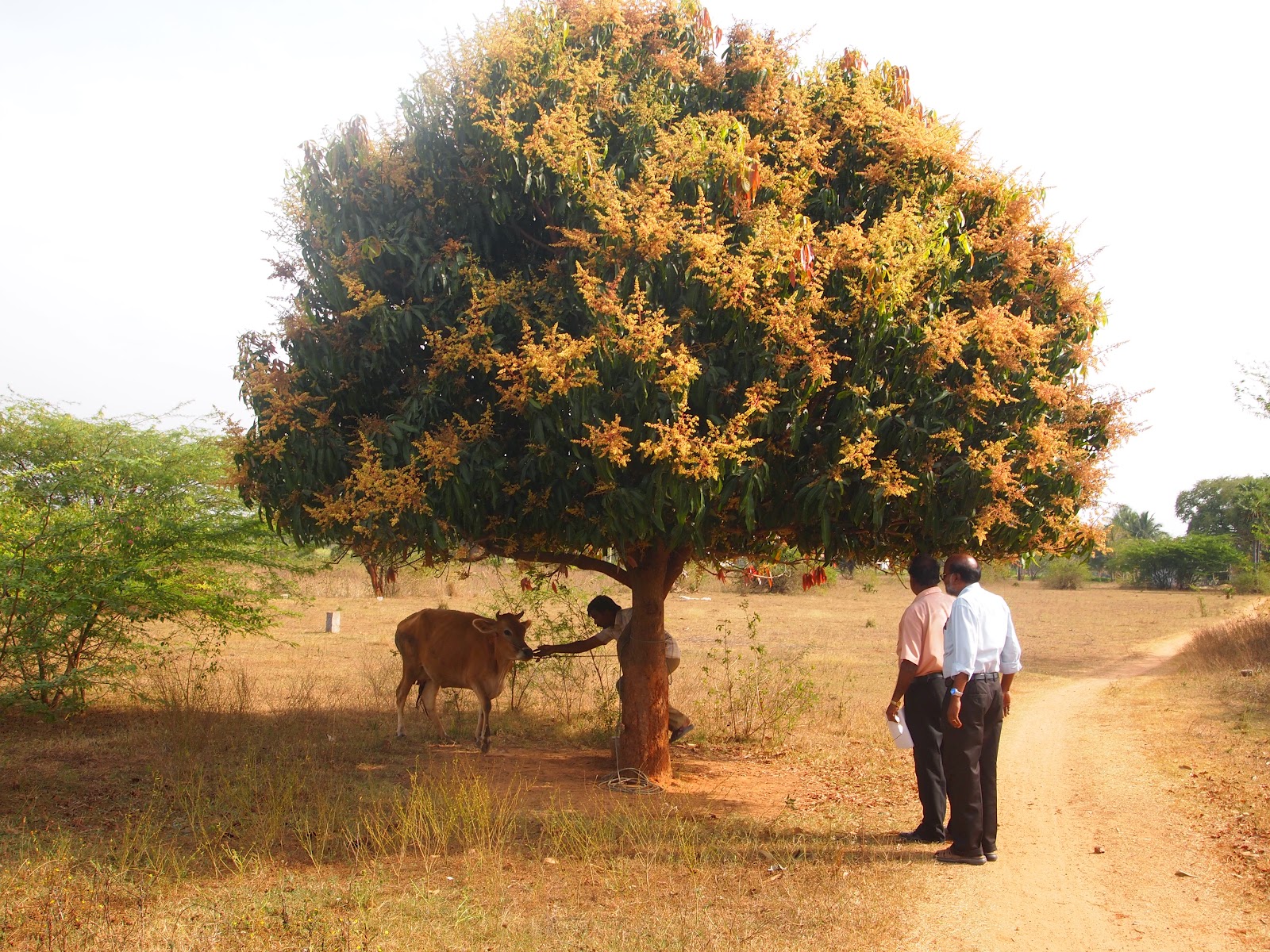
The local RCO trying to catch another of the RUHSA purchased cows.

A sleeping calf

The third cow. Nice shadow.
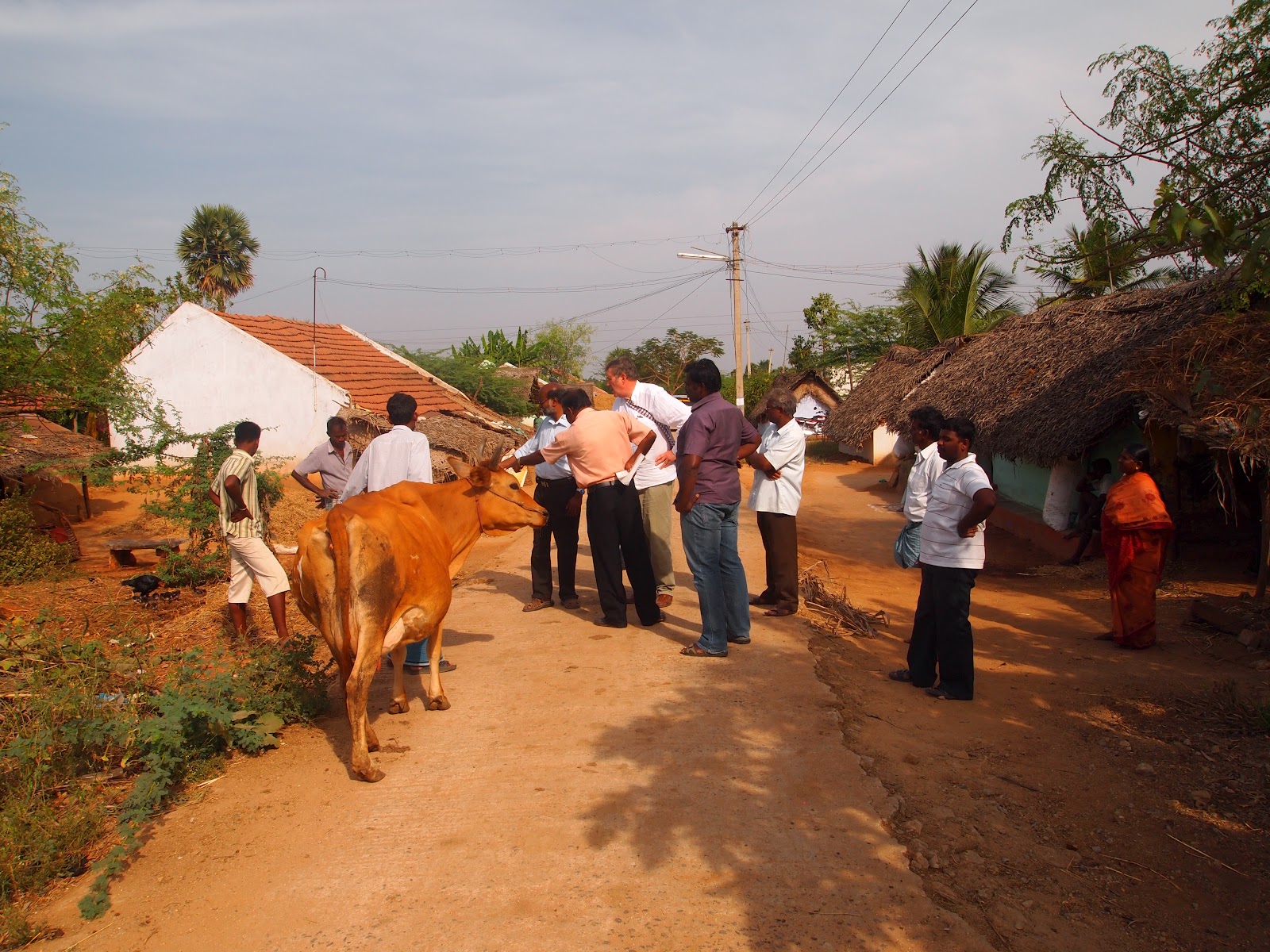
Negotiations and picture opportunities with Richard and the cows.

Jungle fowl and little jungle fowlets

The fifth cow (fourth cow wasn't very photogenic)

Richard showing some more naughty children his photo of them.

Prabhu, the OT, assessing an elderly gentleman who had a stroke a month ago with R hemiparesis. He is going to show him & his family some basic activities of daily living, exercises and positioning to prevent contractures, reduce weakness and improve function. Behind are some informative posters.


Bullock cart in the sun.

You made not be able to see, but this lady is not sure of how jigsaw puzzles work, so she just puts the pieces together regardless of the picture.

We came across a huge festival on the way home one day. There was this crazy, enormous foil-covered construction being dragged through the streets, whilst people danced to loud drumming and generally made a lot of noise. Not sure what the reason was, but with 1000's of gods, any old excuse will do.


Chit-chatting at Kovasampet whilst making paper-bags. They have always been a fiery lot here and they had lots to tell us.

One lady was all fingers and thumbs and kept getting herself stuck to the bags rather then the paper stuck to itself, so she needed help from a neighbour.
Tuesday, February 21, 2012
The downside of working with the elderly: Goodbye to Rathinam
On the spur of the moment and mainly to expend some chapati acquired energy I decided to cycle to Keelalathur Elderly Welfare Centre for an impromptu visit. Tomorrow there is an official visit for which Jamuna, the caretaker, will be forewarned, so everyone will be in their places, scrubbed, doing puzzles, playing games and generally showcasing the simple facilities at the centre, but I like arriving unexpectedly and seeing what is really going on, so today I cycled the 7km to Keelalathur and surprised them. I was heartened to see several piles of completed paper bags which some of the elderly had made. Each bag sells for 75 paise (1p) and so far they have made 738 bags in a month or so. It is hardly a project worthy of Dragon Den interest, but nonetheless sitting and chatting to friends whilst earning a few rupees instead of spending the whole day scouting around for hard labour which moment for moment has a much poorer rate, is a good use of their time.
When I arrived this time there were several new faces and only one of the men was there. Although a couple more arrived later, when I enquired, Jamuna told me that there had been 8 deaths since the start in 2006. I knew of a couple, including Sukkupattu who was a particular favourite, but I was extremely sad to hear that Rathinam had also passed away since August. Apparently he had been hospitalised for TB and had not survived. Rathinam was a relatively educated man who had married a lady with schizophrenia which was very difficult to manage, especially when she had children, so the family allowed him also to marry her younger sister. They all lived in the same house caring for each other and the children. Everyday Rathinam would bring his schizophrenic wife to the centre, and whilst she benignly sat and stared around, he would read the newspaper out loud to his friends. He was particularly fond of me and every time I visited, he would stand up and make a speech about how grateful he was for the centre, giving him peace and friendship in the last years of his life. If anyone complained about not being given saris or other things, he would get cross and tell them to be grateful for what they had. When we discussed the possibility of opening another centre after Keelalathur had been open for a year and, trying to stress the importance of sustainability, ie income generation, we had said that there was a limit to the funds available, he made one of his speeches. He stood up and said that they would always be grateful for what the centre had given them for a year and if it was the turn of other poor elderly to benefit from our generosity, they they would gladly give up coming to the centre so others might have a chance to receive what they had. It is almost inconceivable that someone with so little could be so generous. I am so glad that Rathinam derived such pleasure from the solace that the simplicity of the Keelalathur Elderly Welfare Centre provided him. His wife still comes and she is now surrounded by her friends; even though her mainstay has passed away, she has been incorporated by the group and they carry on her care and support.
When I arrived this time there were several new faces and only one of the men was there. Although a couple more arrived later, when I enquired, Jamuna told me that there had been 8 deaths since the start in 2006. I knew of a couple, including Sukkupattu who was a particular favourite, but I was extremely sad to hear that Rathinam had also passed away since August. Apparently he had been hospitalised for TB and had not survived. Rathinam was a relatively educated man who had married a lady with schizophrenia which was very difficult to manage, especially when she had children, so the family allowed him also to marry her younger sister. They all lived in the same house caring for each other and the children. Everyday Rathinam would bring his schizophrenic wife to the centre, and whilst she benignly sat and stared around, he would read the newspaper out loud to his friends. He was particularly fond of me and every time I visited, he would stand up and make a speech about how grateful he was for the centre, giving him peace and friendship in the last years of his life. If anyone complained about not being given saris or other things, he would get cross and tell them to be grateful for what they had. When we discussed the possibility of opening another centre after Keelalathur had been open for a year and, trying to stress the importance of sustainability, ie income generation, we had said that there was a limit to the funds available, he made one of his speeches. He stood up and said that they would always be grateful for what the centre had given them for a year and if it was the turn of other poor elderly to benefit from our generosity, they they would gladly give up coming to the centre so others might have a chance to receive what they had. It is almost inconceivable that someone with so little could be so generous. I am so glad that Rathinam derived such pleasure from the solace that the simplicity of the Keelalathur Elderly Welfare Centre provided him. His wife still comes and she is now surrounded by her friends; even though her mainstay has passed away, she has been incorporated by the group and they carry on her care and support.
Superstition and ear tagging
Last year one of the most exciting prospects was the idea of working with the SHG Federation, a community organisation formed by elected representatives from each SHG in one area. The Federation acts as an agent for each of the SHGs in applying for, managing & holding funds in order that they do not have to apply directly to the banks themselves. It has the advantage of being a peer represented group who due to economies of scale have greater power than a small village SHG. Peer pressure ensures that people behave with probity because everyone has a vested interest and of course these are elected members who can be stripped of powers if need be. At the time last year, when we raised this with the Federation, they were extremely keen. They helped us develop the model whereby VRCT donated funds for some goats. The money would be handed over to the Federation who using their local knowledge were to identify a group of women who were keen and able to rear goats and then organise the giving of goats to these women. When the goats were sold the capital would be returned and a proportion of the profits would be donated to another SHG to manage an elderly welfare program. The advantage of this model for RUHSA and VRCT was that the same money went much further empowering two SHG groups and an elderly group. The advantage for the federation was supposedly that their status & eligibility for government grants increased because you get extra points for social welfare work done. Everyone seemed keen, however, there was a slip twixt cup and lip between august and now and for some reason the Federation backed down.
As a result, RUHSA developed another model and bypassed the Federation by identifying two SHGs directly themselves and acting as goat agents. Interestingly, both groups behaved quite differently. One group have been highly difficult to work with, starting with being tricky about insurance. Apparently, insurance (which is essential, as we found when one group of elderly beneficiaries ate the goats rather than rearing them) requires the goats to have a tag on their ear. This particular village believe that this is bad luck and were cross about the tagged goats. As one might expect with superstitions, it was difficult to persuade them that there was no connection between ear-tagging and luck. Unfortunately, the goats themselves were not helpful and did not work with us on this. One jumped into a well and another one inconsiderately dropped dead. They even attributed the death of an entirely unconnected cow to the ear tagging, thus enabling the women to nod knowingly and smugly and demand the goats be sold immediately. Such was the pressure that the goats were sold prematurely and the profits realised were very small. However, even so, this represents the first formal community contribution to the Elderly Welfare Program.
The second village were more amenable and relaxed about the whole ear tagging business - I think it was helped by their goats avoiding wells and death successfully - but they have been rearing their goats for longer and those who have sold realised 33% net profit, which is a good return. There are still a few women who have not sold yet, who will scoop even more profit. At the moment it is generating small amounts of money only, but it is a start and also it is an attractive fund raising opportunity for FOV, as not only are you enriching the life of the person who owns the goat but also you are providing some social benefits by subsidising elderly programs. Of course the goat does not benefit much, but there's always got to be an underdog.
Overall, the scheme has some promise, but as it is, the returns are too small and the workload for RUHSA staff in galvanising and motivating the SHG women, not to mention the time taken arguing about the relative likelihood of their goat having Kamikazi tendencies because of the presence of an ear tag, has been somewhat arduous and therefore not sustainable. As a result the team have been looking into other options and there is some interest in a goat shed project where there are a group of goats raised by an SHG in a shed. The advantage being that more goats can be reared at anyone time, there is no need for grazing and income is generated not only by the sale of the goats but also by sale of manure which collects below the slatted floor of the raised shed. RUHSA has a space it can construct a shed and an SHG group who can be in charge of it and the income generated can be shared by RUHSA & the SHG.
In addition to the income generated for the projects as a whole, there has been some movement on opportunities for individual income generation. Prabhu, the OT, has initiated some paper bag making in all the EWCs. The materials are free apart from the glue, which is very cheap, the staff are donating old newspapers and the elderly slowly, but efficiently transform them into paper bags, the demand for which is apparently high. For a couple of hours work, when they come to the centre, whilst sitting and chatting to their friends, they can make some paper bags and earns a few supplementary rupees. Below is one of the men using a stick to spread the glue as he wraps the newspaper around a sari box to make consistent, uniform sized bags.

It has only taken 5 years to develop these income generating projects and we are a long way from self-sustainability, but there are even more ambitious plans in the ofing and now I am chairman of VRCT I have at least some say in what we can do. Which is very exciting.
(*Note to self. Mustn't let the power go to my head.)
As a result, RUHSA developed another model and bypassed the Federation by identifying two SHGs directly themselves and acting as goat agents. Interestingly, both groups behaved quite differently. One group have been highly difficult to work with, starting with being tricky about insurance. Apparently, insurance (which is essential, as we found when one group of elderly beneficiaries ate the goats rather than rearing them) requires the goats to have a tag on their ear. This particular village believe that this is bad luck and were cross about the tagged goats. As one might expect with superstitions, it was difficult to persuade them that there was no connection between ear-tagging and luck. Unfortunately, the goats themselves were not helpful and did not work with us on this. One jumped into a well and another one inconsiderately dropped dead. They even attributed the death of an entirely unconnected cow to the ear tagging, thus enabling the women to nod knowingly and smugly and demand the goats be sold immediately. Such was the pressure that the goats were sold prematurely and the profits realised were very small. However, even so, this represents the first formal community contribution to the Elderly Welfare Program.
The second village were more amenable and relaxed about the whole ear tagging business - I think it was helped by their goats avoiding wells and death successfully - but they have been rearing their goats for longer and those who have sold realised 33% net profit, which is a good return. There are still a few women who have not sold yet, who will scoop even more profit. At the moment it is generating small amounts of money only, but it is a start and also it is an attractive fund raising opportunity for FOV, as not only are you enriching the life of the person who owns the goat but also you are providing some social benefits by subsidising elderly programs. Of course the goat does not benefit much, but there's always got to be an underdog.
Overall, the scheme has some promise, but as it is, the returns are too small and the workload for RUHSA staff in galvanising and motivating the SHG women, not to mention the time taken arguing about the relative likelihood of their goat having Kamikazi tendencies because of the presence of an ear tag, has been somewhat arduous and therefore not sustainable. As a result the team have been looking into other options and there is some interest in a goat shed project where there are a group of goats raised by an SHG in a shed. The advantage being that more goats can be reared at anyone time, there is no need for grazing and income is generated not only by the sale of the goats but also by sale of manure which collects below the slatted floor of the raised shed. RUHSA has a space it can construct a shed and an SHG group who can be in charge of it and the income generated can be shared by RUHSA & the SHG.
In addition to the income generated for the projects as a whole, there has been some movement on opportunities for individual income generation. Prabhu, the OT, has initiated some paper bag making in all the EWCs. The materials are free apart from the glue, which is very cheap, the staff are donating old newspapers and the elderly slowly, but efficiently transform them into paper bags, the demand for which is apparently high. For a couple of hours work, when they come to the centre, whilst sitting and chatting to their friends, they can make some paper bags and earns a few supplementary rupees. Below is one of the men using a stick to spread the glue as he wraps the newspaper around a sari box to make consistent, uniform sized bags.

It has only taken 5 years to develop these income generating projects and we are a long way from self-sustainability, but there are even more ambitious plans in the ofing and now I am chairman of VRCT I have at least some say in what we can do. Which is very exciting.
(*Note to self. Mustn't let the power go to my head.)
Subscribe to:
Posts (Atom)